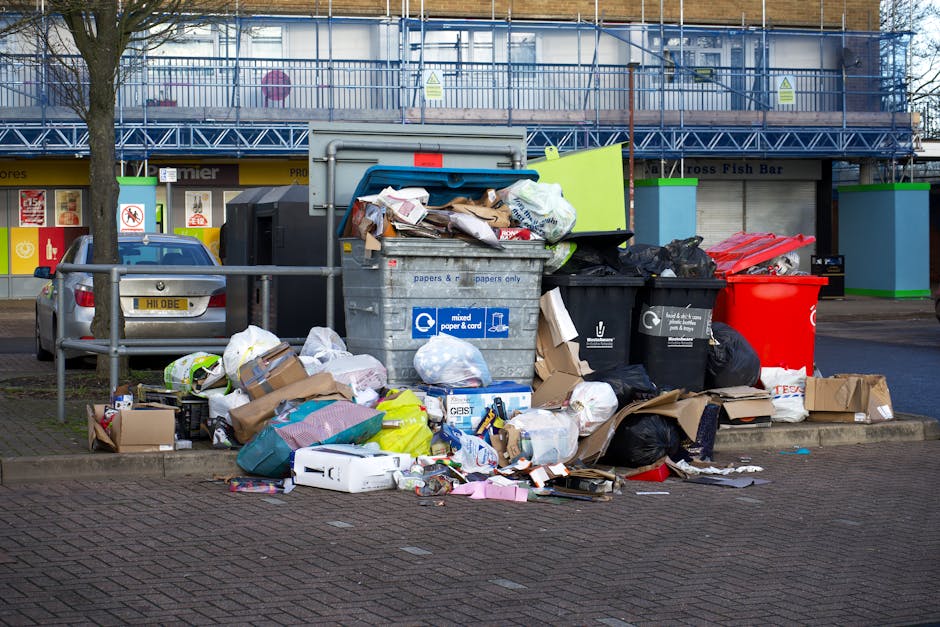
Emergency Rubbish Clearance in North West London Tonight
If you need emergency rubbish clearance in North West London tonight, you probably do not have the luxury of waiting until next week. Maybe a landlord wants the flat ready by morning. Maybe builders have left a pile of waste in the hallway. Or maybe a broken sofa, old cabinets, and black bags are taking over a room you need back now. Whatever the trigger, urgent clearance is about one thing: getting the space safe, usable, and under control without drama.
This guide explains how same-day and evening rubbish clearance usually works, what can be removed, what to check before booking, and how to avoid the common mistakes that make an urgent job slower or more expensive. You will also find practical advice for homes, flats, offices, gardens, garages, and post-refurbishment mess across North West London. It is written for real life, not brochure life.
To make the next step easier, this article also points you to useful service pages such as rubbish removal, rubbish clearance, and waste collection, so you can compare the most relevant options quickly.
Table of Contents
- Why Emergency Rubbish Clearance in North West London Tonight Matters
- How Emergency Rubbish Clearance in North West London Tonight Works
- Key Benefits and Practical Advantages
- Who This Is For and When It Makes Sense
- Step-by-Step Guidance
- Expert Tips for Better Results
- Common Mistakes to Avoid
- Tools, Resources and Recommendations
- Law, Compliance, Standards, or Best Practice
- Options, Methods, or Comparison Table
- Case Study or Real-World Example
- Practical Checklist
- Conclusion
- Frequently Asked Questions
Why Emergency Rubbish Clearance in North West London Tonight Matters
When rubbish piles up unexpectedly, the issue is rarely just visual. In a busy part of London, clutter can block access, create trip hazards, attract pests, and make a property feel far more stressful than it should. If you are dealing with a late-night deadline, an inspection, a move-out, or a sudden clear-out after works, the situation can become urgent very quickly.
North West London adds its own practical pressure. Streets can be tight. Parking can be awkward. Flats may have stair-only access. Some properties sit in rows where one overflowing hallway can affect neighbours almost instantly. In that setting, emergency clearance is less about "tidying up" and more about restoring normality before the mess becomes a bigger issue. To be fair, it is amazing how fast a small pile of waste can turn into a full-scale headache.
This matters for:
- Safety - broken furniture, sharp edges, loose rubble, and heavy bags can cause injury.
- Access - shared entrances, office corridors, and narrow drives need to stay clear.
- Time pressure - end-of-tenancy deadlines, handovers, and building schedules do not wait.
- Neighbour relations - leaving waste in communal areas is rarely a good look.
- Reputation - especially for landlords, agents, shops, and small businesses.
For larger or more specialised jobs, it may help to look at specific services like house clearance, flat clearance, or office clearance depending on the space and the type of waste involved.
How Emergency Rubbish Clearance in North West London Tonight Works
Emergency rubbish clearance is usually designed to be fast, flexible, and simple. The process may vary a little by provider, but the basic flow is fairly consistent.
1. You describe the waste
You explain what needs clearing, where it is, how much there is, and whether access is straightforward. Good detail helps. "Three black bags and a broken wardrobe" is more useful than "a bit of rubbish," though both have their place in conversation.
2. The provider checks urgency and access
For a same-evening job, timing matters just as much as volume. A team will usually ask whether they can park nearby, whether there are stairs, and whether the waste includes bulky or awkward items such as mattresses, sofas, or builders' rubble.
3. A price is quoted or estimated
Urgent jobs are often priced by load size, waste type, labour, and access. If the job is straightforward, you may get a quick estimate. If it is more complex, a few clarifying questions may follow. That is normal and usually sensible.
4. The team arrives and loads the waste
In an emergency, the aim is speed with care. A good crew will still protect walls, take care on stairs, and separate usable or recyclable materials where appropriate. If the scene is a bit chaotic, they have probably seen worse. Probably.
5. The waste is removed and taken to the appropriate facility
This should not end with your pavement full of mystery bags. Responsible clearance means the waste is taken away properly, with disposal arranged through the correct channels. If you need a broader service afterwards, waste removal and waste disposal pages can be useful next reads.
Key Benefits and Practical Advantages
When the clock is against you, emergency clearance offers more than convenience. It can change the whole feel of a property in one visit.
- Fast relief - the room, corridor, or driveway stops feeling impossible.
- Lower stress - you are not spending the evening staring at a pile of waste and wondering what to do with it.
- Safer spaces - clearing broken furniture or debris quickly reduces trip and snag hazards.
- Better presentation - useful for landlords, sellers, tenants, shops, and offices.
- Less disruption to others - especially in flats or mixed-use buildings.
- Professional handling - heavy, awkward, or dirty items are dealt with properly rather than shifted around the property three times.
Another practical benefit is momentum. Once the obvious waste is gone, it is easier to see the rest of the job clearly. A garage looks less hopeless. A flat feels manageable again. The building site corner that looked like a disaster zone suddenly becomes a task list instead of a headache.
If your issue involves larger items, you may find specialised services such as furniture disposal or sofa removal especially helpful, because bulky items often slow everything else down.
Who This Is For and When It Makes Sense
Emergency rubbish clearance is not only for dramatic situations. In fact, many requests are fairly ordinary, just time-sensitive. A leak exposes old junk. A tenant moves out and leaves more behind than expected. A renovation finishes late and the builders need the site cleared before morning. Real life, basically.
This service often makes sense for:
- Tenants who need a flat cleared before checkout or an inspection.
- Landlords and letting agents dealing with abandoned items or last-minute turnover.
- Homeowners who need to reclaim a room, loft, driveway, or garden quickly.
- Office managers clearing clutter before staff return or a new fit-out begins.
- Tradespeople needing post-job waste removed without delaying the next day's work.
- Families facing a sudden bereavement, move, or clean-up that cannot wait.
Not every job needs an emergency call-out, though. If you have time, a planned service may be the better fit. A routine collection can be more economical for mixed household waste, while a larger clear-out may suit home clearance or garage clearance if the goal is to empty a bigger area rather than just remove one urgent pile.
Ask yourself a simple question: Does this need to be gone tonight, or merely soon? That answer will usually tell you which route makes the most sense.
Step-by-Step Guidance
If you want the smoothest possible emergency clearance, a little preparation helps. Nothing fancy. Just enough to save time on the night.
- Identify exactly what needs removing. Split items into groups: bags, cardboard, furniture, rubble, garden waste, or mixed junk.
- Check what cannot be taken. If there are hazardous items, mention them upfront rather than hiding them in the corner. That saves everyone a nasty surprise.
- Take a few photos. A couple of clear images can speed up quoting and avoid misunderstandings.
- Confirm access. Is there parking? A lift? Narrow stairs? A side alley? Small details matter more than people think.
- Decide what stays. Mark anything that must not be taken. Tape, notes, or a simple "leave this" label can prevent mistakes.
- Ask about arrival time. If it is a true emergency, be clear that same-night turnaround is required.
- Prepare the route. Move fragile items out of the way and keep hallways as open as possible.
- Walk through the area after loading. Check for missed pieces, screws, packaging, or debris left behind.
A small but useful tip: if the clearance is happening after builders have finished, keep the waste roughly grouped by type. It makes loading faster and can reduce the time spent sorting on site. If it is a mixed pile, no problem. Just be honest about it.
Expert Tips for Better Results
In our experience, the best urgent clearances are the ones where the customer is clear, calm, and a little organised, even if the room itself is not. That sounds obvious, but on a stressed evening it can be easy to forget.
- Be precise about time. "Tonight" means different things to different people. If you need removal after work, say so.
- Group similar items together. It can speed up loading and make the job feel less chaotic.
- Mention awkward access early. A basement flat, top-floor walk-up, or no-parking street can affect the plan.
- Keep one clear instruction point. Too many voices in one room can slow a job down. One person to show the waste is usually enough.
- Ask what happens after collection. Responsible disposal matters, especially for mixed loads and recyclable materials.
- Use the right service for the right waste. For example, builders' debris is different from a domestic lounge clear-out, and garden cuttings are different again.
For more targeted needs, the related service pages can help you narrow things down. A renovation pile may be better suited to builders waste clearance, while a back yard full of cuttings may point you towards garden clearance. The more closely the service matches the waste, the smoother the job tends to be.
And one tiny thing: have a torch ready if the work is happening late. It sounds almost too simple, but in a dim hallway at 9.30 pm, a torch can save a lot of fumbling.
Common Mistakes to Avoid
Urgent jobs often go wrong for predictable reasons. None of them are dramatic on their own, but together they can turn a straightforward clearance into a long evening.
- Underestimating the amount of waste. A "small pile" can expand once it is moved.
- Not mentioning access problems. Stairs, parking restrictions, and locked gates matter a lot.
- Leaving mixed hazardous items undisclosed. This can affect what can be safely handled.
- Assuming every service is the same. Rubbish collection, waste collection, and full clearances are not always interchangeable.
- Forgetting to separate what should stay. One misread note and suddenly the wrong chair is gone. Annoying, to say the least.
- Booking too late in the evening without checking availability. Some teams can do late call-outs, but not every request is feasible at the last minute.
There is also the emotional mistake: trying to do everything alone when you are already exhausted. If the situation is heavy, messy, or simply too much for one evening, getting help is often the sensible choice, not the indulgent one.
Tools, Resources and Recommendations
For readers who like to stay organised, a few simple tools make urgent clearance easier:
- Phone camera - useful for photos before booking and after the job.
- Torch or headlamp - helpful for evening access, lofts, garages, and basements.
- Labels or tape - quick way to mark items that must remain.
- Gloves - sensible for anyone sorting small pieces or moving dusty items.
- Notepad - handy for listing what is included if there is a complex mix of waste.
From a service perspective, it can be useful to compare broader waste solutions if you are unsure where your job fits. For example, waste clearance is often a practical umbrella term, while rubbish collection can suit lighter, simpler loads. If you are dealing with commercial premises, business waste support may be a better fit than a domestic-only service.
For offices with old desks, chairs, and filing clutter, a dedicated office clearance service can make far more sense than piecing the job together item by item.
Law, Compliance, Standards, or Best Practice
Any rubbish clearance in the UK should be handled with care and common sense. Exact obligations can vary depending on the waste type, who produced it, and how it will be transported or disposed of. So, if you are dealing with something unusual, it is always sensible to ask questions rather than assume.
As a practical rule, a responsible clearance provider should be able to explain:
- where the waste is likely to go after collection
- whether items will be reused, recycled, or disposed of
- how mixed waste is handled
- what happens if hazardous or restricted items are discovered
- what access or parking information is needed before arrival
For customers, the key best practice is simple: do not leave waste to fly-tip, do not guess about hazardous materials, and do not use an unverified operator if the job needs proper disposal. It may feel quicker in the moment, but that sort of shortcut tends to cost more later. Not worth it.
If you are clearing an office, shop, or rented commercial property, make sure the waste is removed in a way that aligns with your own duty of care and site rules. And if you are disposing of bulky domestic items, make sure they are handled as intended, not dumped on a pavement "for a bit" because the evening got late.
Options, Methods, or Comparison Table
Not every urgent waste problem needs the same solution. Here is a simple comparison to help you choose the right path.
| Option | Best for | Typical speed | What to watch |
|---|---|---|---|
| Emergency rubbish clearance | Tonight-only situations, urgent deadlines, blocked access, last-minute jobs | Fastest | Needs clear access details and accurate description of waste |
| Scheduled rubbish removal | Planned domestic or commercial clear-outs | Fast, but not immediate | May be more economical if time is not critical |
| Waste collection | Smaller or more routine loads | Moderate | May suit simple bagged waste rather than bulky items |
| Full clearance service | Rooms, flats, houses, garages, offices, or gardens that need emptying | Depends on size | Better when the whole area needs resetting, not just one pile removed |
If you are unsure which path fits, a quick way to decide is this: if the waste is blocking your evening or tomorrow morning, emergency clearance is likely the right starting point. If it is simply overdue, a planned appointment may be better value.
Case Study or Real-World Example
Picture a typical North West London evening. A tenant has moved out of a first-floor flat, and by 7 pm the hallway is still crowded with an old sofa, a damaged wardrobe, flattened boxes, and a few bags of mixed junk from the final clear-up. The landlord wants the property ready for cleaners the next morning. The estate agent has already asked for pictures. Time is tight, and nobody wants the neighbours stepping over loose cardboard at 8.15 pm.
In that kind of situation, the most useful approach is usually to split the waste into clear categories, send a few photos, confirm access and parking, and arrange a fast collection window. If the sofa is the main obstacle, a targeted service like sofa removal can speed things up. If the load also includes general household contents, a broader flat clearance may be the cleaner option.
The big win is not just that the waste disappears. It is that the flat feels open again. A bare floor, a clear doorway, the faint smell of old dust replaced by fresh air from the window. That tiny shift changes the whole mood of the place. Frankly, that is often the difference between a stressful night and a manageable one.
Practical Checklist
Use this checklist before you book emergency rubbish clearance tonight:
- Have you identified exactly what needs removing?
- Have you taken photos of the waste and access route?
- Do you know whether the job is domestic, commercial, or mixed?
- Have you checked for stairs, lifts, parking, or locked gates?
- Have you separated items that must stay?
- Have you mentioned any heavy, bulky, or awkward items?
- Are there any materials that may need special handling?
- Do you need the clearance finished by a specific time tonight?
- Have you decided whether you need a focused collection or a wider clearance service?
- Are you ready to confirm the access details once the booking is made?
Practical takeaway: the fastest emergency clearance jobs are usually the ones where the waste is clearly described, the access is honest, and the customer knows what absolutely must stay. Simple, but it works.
Get in touch early if you can, even if it feels late. A quick conversation often saves a lot of back-and-forth later, and that matters most when the clock is ticking.
Conclusion
Emergency rubbish clearance in North West London tonight is about more than speed. It is about restoring order when time, access, and stress are all working against you. Whether you are dealing with a house, flat, office, garage, garden, or post-build mess, the right response is a clear plan, a realistic description of the waste, and a service that can actually deliver when it matters.
The strongest results usually come from simple preparation: know what is being removed, explain the access properly, and choose the service that fits the job rather than forcing everything into one category. That little bit of clarity can save time, money, and a fair amount of frustration.
If your situation is urgent tonight, do the practical thing first. Get the photos ready, check the access, and compare the most relevant clearance options. You do not need to solve the whole problem in one breath. Just take the next sensible step.
Get a free quote today and see how much you can save.
And if all you need right now is a clean slate by morning, that is enough. One cleared room can change the whole evening.
Frequently Asked Questions
How fast can emergency rubbish clearance in North West London happen?
It can often be arranged the same evening if the team has availability, the waste is described clearly, and access is straightforward. The sooner you share photos and location details, the better the chances of a fast turnaround.
What types of rubbish can usually be removed tonight?
Most general household waste, bagged rubbish, bulky furniture, office items, garden waste, and builders' debris can often be handled. If you have unusual, hazardous, or restricted materials, mention them before booking so you get the right advice.
Is emergency clearance more expensive than a regular booking?
It can be, because urgent scheduling and out-of-hours work often involve more pressure on logistics and staffing. That said, the exact cost depends on volume, access, waste type, and the level of labour needed.
What information should I send for a quick quote?
Send clear photos, the address or area, the type of waste, approximate amount, access details, and your preferred collection time. If there are stairs, parking restrictions, or heavy items, say so early.
Can a clearance team remove a sofa or mattress tonight?
Usually yes, if the provider offers bulky-item handling and has a suitable vehicle and crew. For very specific items, services like sofa removal or furniture disposal can be a better match.
What if my waste is from building work?
Builders' rubble, plasterboard, timber, and renovation waste often need a more specific approach than mixed domestic rubbish. If that is your situation, look at builders waste clearance rather than a generic pick-up.
Do I need to sort the rubbish before collection?
Not always, but sorting can save time and make the job smoother. If waste is mixed, say so honestly. If you can group similar items together, that often helps more than people expect.
What should I do if I live in a flat with difficult access?
Tell the provider about stairs, lifts, entry codes, loading restrictions, and any narrow turns. Flat access details are especially important, so a flat clearance style job may be the right reference point.
Can you clear rubbish from an office after hours?
Yes, many urgent commercial jobs are done outside normal business hours to avoid disrupting staff or customers. If the property is commercial, business waste or office clearance pages may be especially relevant.
What if I only need part of a property cleared?
That is very common. You might only need one room, a garage corner, a driveway pile, or a garden section cleared. Focused services such as garage clearance or garden clearance can be a smart fit.
How do I know the waste will be handled properly?
Ask where the waste will go after collection and what handling process is used. A trustworthy provider should be comfortable explaining disposal and separation practices in plain English, without dodging the question.
What is the best next step if I need help tonight?
Gather photos, confirm access, and choose the most relevant service page based on your waste type. If you are not sure whether it is a one-off pickup or a full clear-out, start with the broader rubbish clearance or waste clearance options and go from there.